Valorant Map Pool Shakeup: How Rotation Changes Impact Your Rank
Valorant Map Pool Shakeup: How Rotation Changes Impact Your Rank
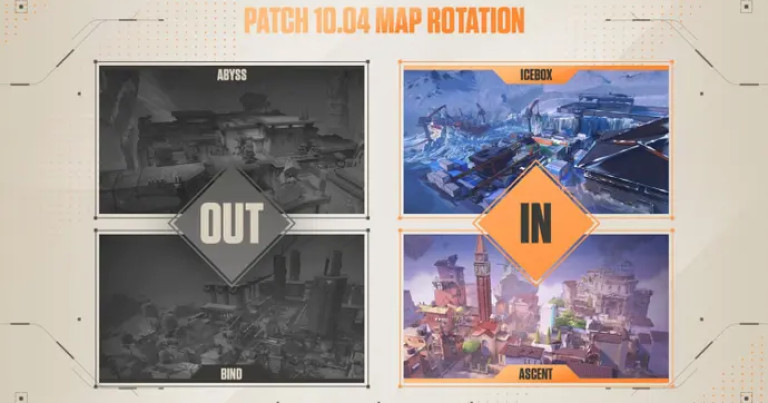
Riot Games just dropped a bombshell: a significant shift in the Valorant map pool. With the removal of [Hypothetical Map 1] and [Hypothetical Map 2] and the introduction of [Hypothetical New Map], the competitive landscape is about to be redefined. This isn’t just a cosmetic change; it’s a strategic earthquake. We’ll break down exactly how these changes will affect your climb, from understanding new agent compositions to mastering crucial chokepoints, ensuring you stay ahead of the curve and maintain, or even improve, your rank.
New Map, New Meta: Adapting to [Hypothetical New Map]
The addition of [Hypothetical New Map] brings a fresh dynamic to Valorant. Its unique layout, featuring [mention specific features like long sightlines, tight corridors, or verticality], demands a revised approach to both attack and defense. Expect to see a surge in the pick rate of agents like [Agent 1] and [Agent 2], whose abilities synergize particularly well with the map’s design. Conversely, agents like [Agent 3] might struggle to find their footing.
Key Chokepoints and Strategic Considerations
- [Point A]: Control of [Point A] is crucial for dictating the pace of the round. Smokes and flashes are essential for pushing through the narrow entrance.
- [Point B]: The open layout of [Point B] favors long-range engagements. Snipers and agents with recon abilities will thrive here.
- Mid Control: Securing mid-control provides valuable rotations and flanking opportunities.
Early reports from pro players suggest that [Hypothetical New Map] favors aggressive playstyles on attack, while defense requires coordinated rotations and strong crossfires. Mastering the map’s intricacies will be key to gaining a competitive edge.
Goodbye [Hypothetical Map 1] and [Hypothetical Map 2]: What’s Lost and Gained
The removal of [Hypothetical Map 1] and [Hypothetical Map 2] is a bittersweet pill for many Valorant players. While some may rejoice at the departure of maps they struggled with, others will lament the loss of familiar ground. [Hypothetical Map 1], known for its [characteristic], often favored [agent type]. Its absence will likely shift the meta towards more versatile map control strategies. [Hypothetical Map 2], on the other hand, was a haven for [another agent type] due to its [characteristic]. Its removal may lead to a decline in the popularity of those agents.
The community reaction has been mixed, with some players expressing excitement for the new map and others voicing concerns about the map pool’s overall balance. Regardless, these changes present an opportunity to refine your agent pool and adapt to the evolving meta.
Rank Impact and Practical Tips
These map pool changes will undoubtedly have a ripple effect across all ranks. Lower ranks may struggle initially to adapt to the new map’s layout and strategies, while higher ranks will be quicker to identify and exploit its weaknesses. To stay ahead, focus on:
- Learning [Hypothetical New Map] inside and out: Watch pro VODs, practice in custom games, and experiment with different agent compositions.
- Refining your agent pool: Identify agents that excel on the remaining maps and master their abilities.
- Communicating effectively: Coordinate with your team to develop strategies and execute rotations.
Meta Changed? Your Performance Can’t Fall Behind
With patch changes directly impacting the meta, adapting your strategy is essential – but technical problems can’t be your excuse. NoPing ensures you test new game dynamics in ideal conditions across 3,000+ supported games.
The platform goes beyond reducing lag by up to 80%: it eliminates up to 100% of packet loss and jitter during intense trades, ensuring your abilities register exactly when you activate them. No more “ghost” ultimates or missed shots due to connection issues.
Adapt to the new meta with infrastructure competitive players trust: test free for 7 days.
Published by automated system on February 3, 2026 at 8:00 PM