Trainwreck Valorant Ban: Riot Exposes Boosting Ring Details
Trainwreck Valorant Ban: Riot Exposes Boosting Ring Details
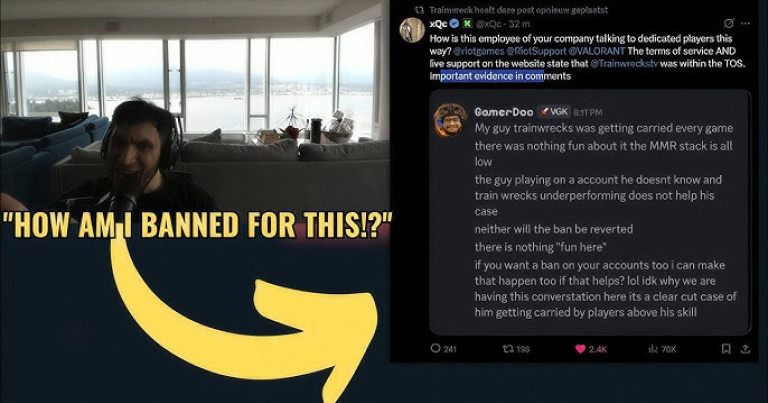
The recent ban of streamer Trainwreck from Valorant sparked heated debate within the community. However, Riot Games has stepped forward to clarify the situation, revealing that the ban wasn’t simply a case of playing with friends on alternate accounts, but rather a more complex boosting ring operation. This revelation has significant implications for the competitive integrity of Valorant and raises questions about Riot’s stance on boosting.
Riot’s Investigation Uncovers Organized Boosting
Contrary to initial assumptions, Riot’s investigation revealed that Trainwreck’s ban stemmed from a coordinated effort to boost accounts. According to official statements, the situation involved more than just a five-stack of friends playing together. The investigation uncovered evidence suggesting a systematic approach to artificially inflating account ranks. Key details include:
- Multiple accounts linked to the boosting operation.
- Evidence of win-trading and other forms of rank manipulation.
- Violation of Valorant’s terms of service regarding competitive integrity.
Riot’s firm stance underscores their commitment to maintaining a fair and competitive environment for all players. The incident serves as a warning to those engaging in similar activities, highlighting the potential consequences of violating the game’s rules. This decision also aims to reassure legitimate players that Riot is actively working to combat boosting and preserve the integrity of ranked play.
Impact on Valorant’s Competitive Scene
The exposure of this boosting ring has sent ripples through the Valorant community. While the ban itself is specific to Trainwreck, the underlying issue of boosting remains a persistent concern. The incident highlights the need for continued vigilance and stricter enforcement of anti-boosting measures. This could lead to changes in how Riot detects and punishes boosting, potentially impacting players across all ranks.
Community Reactions and Implications for Players
The community’s reaction to the ban has been mixed, with some players supporting Riot’s decision and others questioning the severity of the punishment. However, the majority agree that boosting undermines the competitive spirit of Valorant. The incident serves as a reminder that actions have consequences, and that maintaining a fair playing field is crucial for the long-term health of the game. For players of all ranks, this means:
- Understanding and adhering to Valorant’s terms of service.
- Reporting suspected instances of boosting or rank manipulation.
- Focusing on improving individual skill rather than relying on artificial means to climb the ranks.
Maintaining Competitive Integrity in Valorant
The Trainwreck ban underscores the importance of a stable and reliable connection for competitive play. While skill and strategy are crucial, network issues can significantly impact performance, especially in high-stakes matches. Ensuring a lag-free experience is essential for maintaining competitive integrity and achieving peak performance in Valorant.
The Same Technical Advantage as VCT Pros
In competitive matches, every frame and millisecond counts. It’s no coincidence professional athletes use network optimizers in bootcamps – the difference between perfect routing and standard connection determines who gets the first kill.
NoPing offers this competitive advantage across 3,000+ games: Multi-Path Connection finds the fastest route to Riot servers, while advanced technology eliminates up to 100% of packet loss and jitter, reducing lag by up to 80%. Rubber banding and lag spikes become problems of the past.
Ever thought about ranking up simply by eliminating freezes that cost you rounds? Millions of players already made this choice. Start your free 7-day trial.
Published by automated system on May 10, 2026 at 2:00 PM