Trainwreck Valorant Ban Explained: Riot’s Smurfing Crackdown
Trainwreck Valorant Ban Explained: Riot’s Smurfing Crackdown
The recent ban of streamer Trainwreck from Valorant sparked heated debate within the community. Was it a simple case of playing with friends on lower-ranked accounts, or did Riot Games uncover something more sinister? This article dives deep into Riot’s official statement, exploring the nuances of the ban and its implications for Valorant’s fight against smurfing. Learn why this ban is significant and how it impacts the competitive integrity of Valorant.
Riot’s Stance on Trainwreck’s Valorant Ban
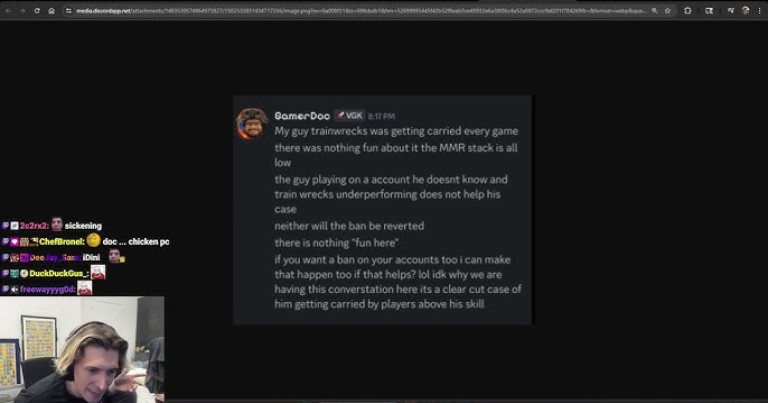
Initially, the ban was perceived by some as an overreaction to Trainwreck playing with friends. However, Riot Games has clarified that the situation was more complex than a simple five-stack. According to their official statement, the ban stemmed from a deeper investigation into potential smurfing activities. While the specifics remain confidential to protect the integrity of their anti-cheat systems, Riot emphasized that the decision was based on substantial evidence beyond just playing with lower-ranked players.
- The ban was not solely based on playing with friends.
- Riot’s investigation uncovered potential smurfing activities.
- Specific details are confidential to protect anti-cheat measures.
- The decision was based on substantial evidence.
Smurfing’s Impact on Valorant’s Competitive Scene
Smurfing, the act of higher-ranked players using lower-ranked accounts to play against less skilled opponents, has long been a plague on Valorant’s competitive scene. It undermines fair play, ruins the experience for legitimate lower-ranked players, and distorts the ranking system. Riot’s crackdown on smurfing, exemplified by the Trainwreck ban, signals a commitment to maintaining a healthy and competitive environment for all players. This ban sends a clear message: smurfing will not be tolerated.
Community Reactions and the Future of Valorant’s Anti-Smurfing Efforts
The community’s reaction to the ban has been mixed. Some applaud Riot’s decisive action, seeing it as a necessary step to combat smurfing. Others express concern about the lack of transparency surrounding the ban and the potential for false positives. Regardless of individual opinions, the incident has reignited the discussion about smurfing and its impact on Valorant. Riot’s continued efforts to refine its anti-smurfing measures will be crucial in ensuring a fair and enjoyable experience for all players, from Iron to Radiant. This includes improving detection methods and implementing stricter penalties for those caught smurfing.
Maintaining Peak Performance in a Competitive Environment
The Trainwreck ban highlights the importance of fair play and a stable competitive environment in Valorant. But even with Riot’s efforts to combat smurfing, technical issues like lag and packet loss can still hinder your performance. A stable connection is just as important as skill when climbing the ranks.
The Same Technical Advantage as VCT Pros
In competitive matches, every frame and millisecond counts. It’s no coincidence professional athletes use network optimizers in bootcamps – the difference between perfect routing and standard connection determines who gets the first kill.
NoPing offers this competitive advantage across 3,000+ games: Multi-Path Connection finds the fastest route to Riot servers, while advanced technology eliminates up to 100% of packet loss and jitter, reducing lag by up to 80%. Rubber banding and lag spikes become problems of the past.
Ever thought about ranking up simply by eliminating freezes that cost you rounds? Millions of players already made this choice. Start your free 7-day trial.
Published by automated system on May 12, 2026 at 2:00 PM